Publishing content is easy. Creating content that consistently attracts visitors from Google is much more challenging.
Many business owners spend hours creating content only to discover that almost nobody reads it. In most cases, the problem isn’t the quality of the writing—it’s that the content wasn’t created with search engine optimization (SEO) in mind.
The good news is that you don’t need to be an SEO expert to create content that ranks well. By following a simple process, you can produce content that both search engines and your audience appreciate.
Start With Keyword Research
Every successful piece of content begins with understanding what people are searching for.
Before writing a single sentence, identify a keyword or phrase your ideal customer is likely to type into Google. This gives your content a clear focus and helps search engines understand what your page is about.
For example, instead of creating general content about gardening, you might target a phrase like:
- How to grow tomatoes in containers
- Best vegetables for small gardens
- Beginner vegetable gardening tips
These specific phrases are often easier to rank for than broad, highly competitive keywords.
Choose one primary keyword and naturally build your content around it.
Understand Search Intent
Search engines want to provide the best answer to every search.
Ask yourself why someone is searching for your chosen keyword.
Are they trying to:
- Learn something?
- Solve a problem?
- Compare products?
- Find a local business?
- Make a purchase?
If someone searches for “how to write blog posts that rank in Google,” they expect a practical guide—not a sales pitch.
The better your content satisfies the reader’s intent, the more likely Google is to recommend it.
Create an Attention-Grabbing Title
Your title is often the first thing potential readers see.
A strong title should clearly explain what the content offers while including your primary keyword.
Examples include:
- How to Write Blog Posts That Rank in Google
- 10 Tips for Writing SEO-Friendly Content
- A Beginner’s Guide to Writing Content That Gets Found Online
Avoid misleading or overly dramatic headlines. Instead, focus on delivering a clear promise that your content fulfills.
Write an Introduction That Hooks the Reader
Many visitors decide within seconds whether they’ll continue reading.
Your introduction should quickly explain:
- The problem
- Why it matters
- What the reader will learn
Keep it concise and encourage readers to continue by showing them the value they’ll receive.
Organize Your Content
Large blocks of text can overwhelm readers.
Break your content into logical sections using descriptive titles and subheadings.
Well-organized content is easier for visitors to scan and helps search engines understand your page.
Each section should focus on one specific topic, making the content easier to follow.
Create Helpful, Original Content
Google rewards content that genuinely helps people.
Rather than repeating information found on dozens of other websites, try to provide additional value.
You might include:
- Step-by-step instructions
- Personal experience
- Real-world examples
- Practical tips
- Common mistakes to avoid
The more useful your content is, the more likely readers are to stay on your page, share it, and return to your website.
Naturally Include Your Keywords
Years ago, many websites ranked by repeating keywords over and over.
Today, that approach usually hurts your rankings.
Instead, naturally include your primary keyword in places such as:
- The page title
- The main heading (H1)
- Important section titles
- The introduction
- Throughout the content where appropriate
- The conclusion
Use related words and phrases instead of repeating the exact keyword excessively. Search engines are much better at understanding context than they used to be.
Make Your Content Easy to Read
Online readers rarely read every word.
Instead, they scan pages looking for the information they need.
Improve readability by using:
- Short paragraphs
- Bullet lists
- Numbered steps
- Clear section titles
- Simple language
A clean layout encourages visitors to stay on your page longer, which can improve engagement.
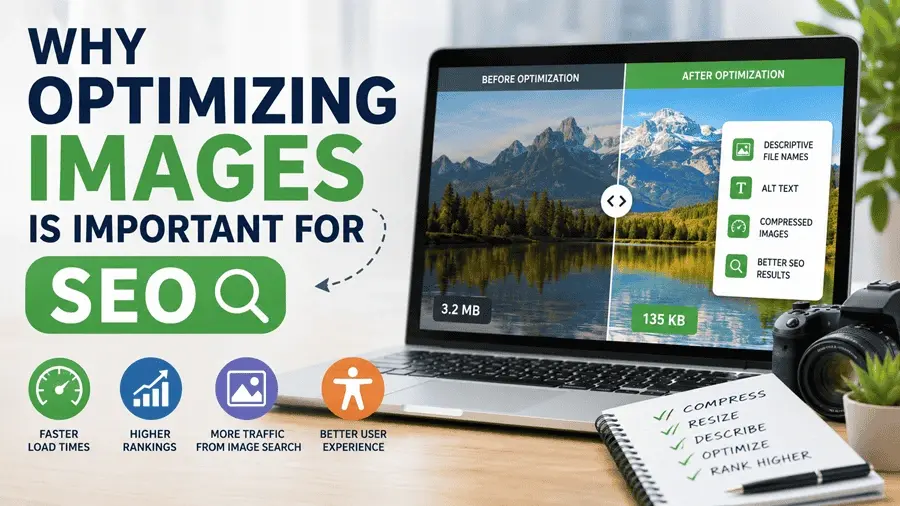
Optimize Your Images
Images make content more engaging, but they also provide SEO opportunities.
Whenever possible:
- Use descriptive filenames.
- Add meaningful alt text.
- Compress images so pages load quickly.
- Choose images that support your content.
Fast-loading pages create a better user experience, and page speed is one factor search engines consider when ranking websites.
Add Internal Links
Internal links connect one page of your website to another.
For example, if you mention keyword research, you can link to another article explaining that topic in greater detail.
Internal links help:
- Visitors discover more content.
- Search engines crawl your website.
- Spread authority throughout your site.
- Keep readers engaged longer.
Over time, a strong network of related content can significantly improve your SEO.
Write a Strong Conclusion
Don’t simply stop writing when you’ve finished your main points.
Summarize the content and encourage readers to take the next step.
Depending on your business, that could include:
- Reading another article
- Downloading a free guide
- Joining your email list
- Viewing your products or services
- Enrolling in one of your courses
Every piece of content should have a purpose beyond generating traffic.
Keep Your Content Updated
SEO isn’t something you do once and forget.
As information changes, revisit your older content.
Update statistics, improve explanations, replace outdated screenshots, and add new information when appropriate.
Fresh, accurate content often performs better than pages that haven’t been updated in years.
Final Thoughts
Creating content that ranks on Google isn’t about tricking search engines—it’s about providing helpful information that answers real questions.
Start by choosing the right keyword, understand what your audience wants to learn, organize your content clearly, and focus on providing genuine value. Optimize your page with descriptive titles, internal links, and properly optimized images, then keep your content updated over time.
The more high-quality content you publish, the more opportunities your website has to appear in search results. With consistency and a focus on helping your audience, your website can become one of your most valuable sources of long-term traffic and new customers.
Our Free SEO Courses




Related SEO Articles